
WRITTEN BY: Catechist Branislav Ilić, editor of the portal „Kinonia“
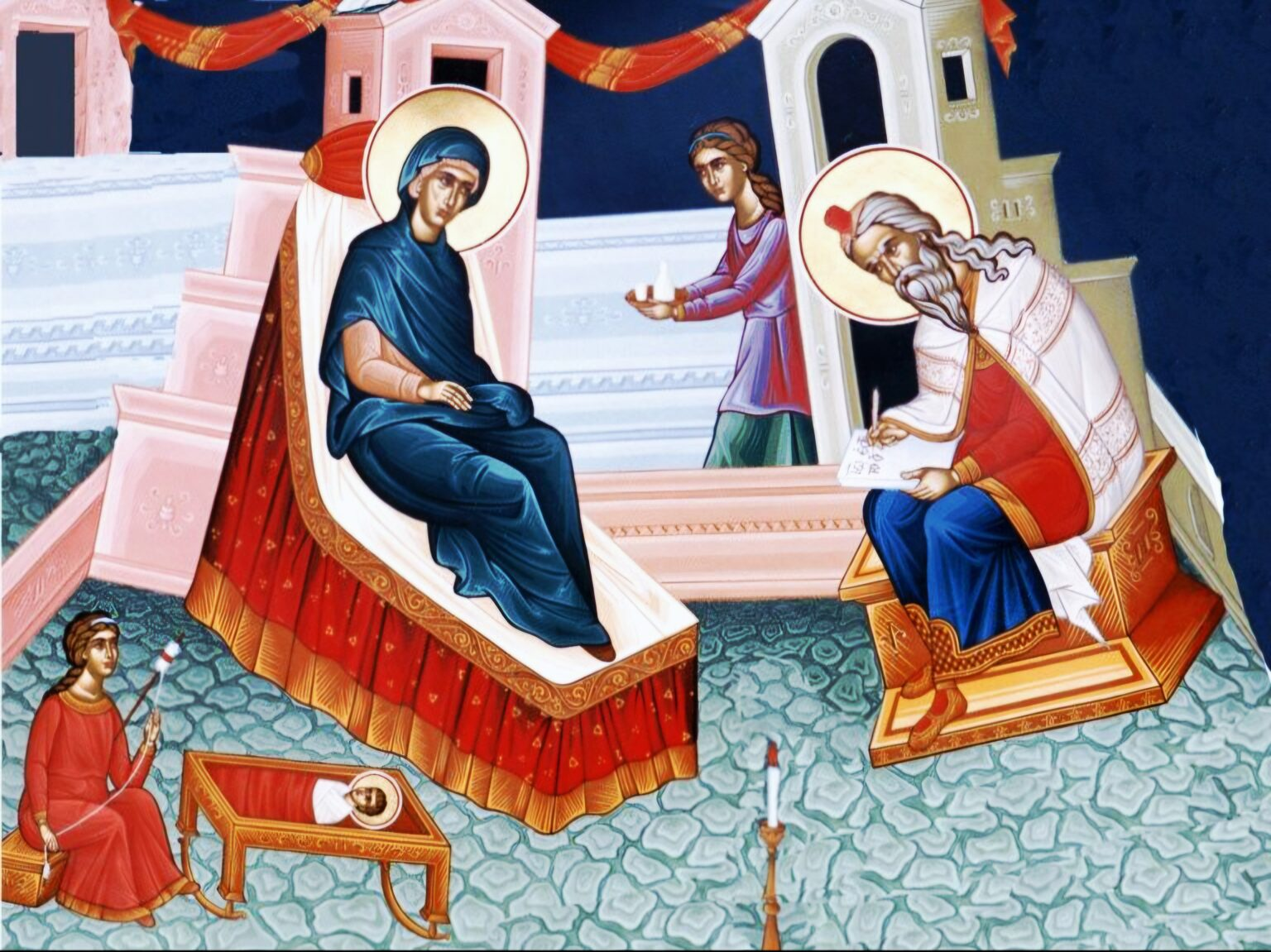
The birth of Saint John the Baptist was a work of God’s providence and an expression of God’s wondrous love. His parents, the high priest Zechariah and the righteous Elizabeth, were already advanced in years and bitterly grieved over their childlessness. How much hope, how much faith, how much sincere trust in the all-good will of God was needed for two old people to still hope that a child would be born to them as a justification for their long life and as a sign of hope for the life of the world to come. Their trust was not shamed, because faith, hope, and patience are never shamed. And just as at night, before dawn, the voices of birds are suddenly heard greeting the sun, which is not yet visible, so in the darkness of unbelief and betrayal, a voice crying in the wilderness spread throughout the world, calling for repentance.
In the Gospel of Luke, we hear how the righteous Zechariah was chosen by lot to enter the temple of the Lord to offer incense. While the multitude of people were praying outside during the offering of incense, an angel of the Lord appeared to him, standing on the right side of the altar of incense. When Zechariah saw him, he was startled and fear seized him. The angel said to him: “Do not be afraid, Zechariah, for your prayer has been heard, and your wife Elizabeth will bear you a son, and you will call his name John” (Luke 1:9-13). Saint John Chrysostom, explaining this, says that Zechariah, entering the temple of the Lord, prayed for only one thing – the forgiveness of the sins of the people – but he received the promise of deliverance from the barren womb. He sought one consolation, and received another. Zechariah desired more the healing of the souls of those who had sinned. He seemed to say: “The people, praying outside, await me with an answer from the Heavenly King… Through me they brought their prayers to the King, asking for forgiveness of their sins; I pray for this, to fulfill the desire of the people, but I have been told of the birth of a son. What will be the benefit to the people if I have a son?” The righteous Zechariah does not see that he receives everything he asked for in abundance. He prays only for the people, but he is given the good news of the One who will prepare all nations for salvation. The commander of the army of the Heavenly King is born and the forerunner of the liberation of the world from sin. But Zechariah does not believe and demands confirmation from the words of God. Because of his doubt and unbelief, Zechariah is punished with muteness, and he remained, as the Gospel says, in silence, awaiting the birth. “He entered the temple,” says Saint John Chrysostom — for the liberation of others, but he himself was condemned. By bringing the service of incense, he bore the sign of exile. And when a son is born, the speech returns to the father. Zechariah, understanding the ways of God’s Providence, exclaims: „Blessed be the Lord God of Israel, for he has visited and redeemed his people“ (Luke 1:68).
The life of Saint John the Baptist is the life of a great ascetic and striver. When King Herod ordered the killing of all the infants in Bethlehem and its vicinity, the righteous Elizabeth fled with her baby to the mountains. The soldiers demanded that Zacharias reveal the place where his mother had hidden their son. He did not answer them and was killed between the temple and the altar, as the Evangelist Matthew testifies (Matt. 23:35). The righteous Elizabeth soon died, and the infant grew up alone in the Egyptian desert until his appearance preaching repentance to the people of Israel. That is why the Apostle Matthew in the Gospel calls John the Baptist “a voice crying in the wilderness.” John’s baptism was a baptism of repentance. John’s baptism was an awakening of conscience, without which it is impossible for a person to see and accept Christ.
Saint John was not only a holy man and a prophet, but also the Forerunner and Baptist of the Lord. This characteristic greatly distinguishes him from other Old Testament prophets and elevates him above them. Other prophets saw the coming of Christ only from afar and in the shadow, and so they spoke of Him in symbols, and all died, not being worthy to see the Messiah whom they announced. Saint John the Baptist saw Him and spoke with Him face to face, and therefore he not only announced His coming, but also bore witness to His appearance, and was even honoured with the honour of baptizing Him, thus, as it were, dedicating Him to a great service to humanity. So, he was more than a prophet: He was an earthly angel of God, sent by the Heavenly Father before His beloved Son to prepare the way for Him (see Isaiah 40:3-5; Malachi 3:1; Luke 3:4-6). He was the friend of the Son of God, entrusted with announcing to the people the coming of the promised Messiah and preparing them to receive Him. No prophet had ever received such a great honour, and this places him above all those born of women.
John the Baptist was great not only because of his miraculous ministry, but also because of his character and holy life. The holy evangelists describe him as someone who led a strict and holy life, who passionately loved the truth and preached to people with selflessness, and at the same time was modest and humble of heart, so that in this respect he is also considered one of the greatest saints. According to the evangelists, Saint John lived in the desert from childhood, wearing clothes made of camel’s hair and a leather belt, eating locusts and wild honey, but even this food he ate very little, so that it was said of him that he neither ate nor drank (Matt. 11:18). With such a miraculous severity of life, he combined even greater purity of morals, so that the entire Jewish people recognized him as a great righteous man, and some even wondered if he was the Christ. History does not present another such man: All the Prophets, although they led a holy and ascetic life, were not as strict as John the Baptist.
Saint John zealously preached the truth and boldly condemned the vices of the people with complete self-denial. Throughout the region of the Jordan he preached the baptism of repentance for the forgiveness of sins, and when sinners came to him for baptism, he boldly rebuked them. Saint John, as a righteous and holy man, rebuked not only the Pharisees, soldiers, and tax collectors, but the entire Jewish people, and even the kings. Thus, Saint John boldly rebuked Herod, who had entered into an unlawful marriage with Herodias, saying: “It is not lawful for you to have your brother’s wife” (Mark 6:18). And in this case also, he acted with greater courage and self-sacrifice than any other prophet. Saint John did not fear the wrath of his terrible enemies, nor did he flee into the wilderness, but bravely endured imprisonment and martyrdom. Saint John the Baptist suffered for God’s truth, being beheaded by the sword. His life set a great example of trust in God and serving Him.
With his unwavering courage in confessing the truth, Saint John the Baptist practiced great humility, which is a hallmark of his spiritual greatness. The example of John’s humility teaches us today that, although aware of our unworthiness, we can fulfill the ministry to which God has called us. If Saint John is a great prophet and friend of God, then we must honour him with special reverence, offering him prayerful praise. We are called to imitate his virtues and good qualities of soul. We are also called to turn to him in prayer with firm confidence that he will provide us with the help we need. The Forerunner of Christ, being close to God on earth, became even closer to Him in heaven and powerfully intercedes before Him for us out of the holy love that is characteristic of all the righteous.