
While preparing for this gathering, a few days ago I read a teaching on prayer by the Holy Elder Porphyrios the Athonite on the „Kinonia“ portal, in the section titled „From the Patristic Treasury.“ It reads: „When a person prays for their neighbour, a good power emanates from them, reaching the other person, healing, strengthening, and enlivening them. Indeed, he who bears goodness within himself mysteriously and gently transmits that good power to others. He sends light to his neighbour, creating a circle of protection around them and guarding them from evil. When we harbour a good and benevolent intention towards another and pray for them, we heal them and help them draw closer to God.”
One of the recently published articles on „Kinonia“ explains the importance of the Church as a house of prayer—one that is not enslaved by temporal categories or trends, but whose fundamental criterion is encapsulated in the well-known, yet never sufficiently repeated, words of Saint Irenaeus of Lyons: „Our faith is in accord with the Eucharist, and the Eucharist confirms our faith.“ The Church’s dogmas constitute an act of the Revelation of eternal truths within history, and the task of theology is not merely to formulate these truths rationally, but to translate them into the lived experience of the Church. Thus, the individual participates in the Truth as an event of communion—communion with the Holy Trinity, with ages past, with the present moment, and with what is yet to come. In this sense, time is sanctified within the Church as a vessel of eternity, uniting yesterday, today, and tomorrow. Thus, it becomes possible to remember the future—specifically within the Eucharistic prayer, which transitions from the historical events of Christ’s economy of salvation to that which is yet to come: the Second Coming of the Lord.
In this light, theoretical or theological truths—formulated through the centuries-long ascetic practice of the Church as a communion of many in Christ—find their constant renewal and confirmation in the actual celebration of the Divine Liturgy and other services and prayers of the Holy Church.
That is why the reports „Kinonia“ brings us from gatherings across our Local Church—as well as from other Orthodox Local Churches—are so important. They are not merely a collection of information, but a testament to the fact that, through the same Spirit of worship, the Church continues its journey towards the Eschaton: the Kingdom of God, which manifests among us as „already, yet not fully.“
The teachings of clergy found in the „From the Ambo“ section reflect Gospel truths—sometimes quoted verbatim, and at other times clothed in new forms through creative expression in the same Holy Spirit, yet adapted to the new circumstances and challenges of our times. Lectures featured in the „From the Lectern“ section follow this same path, gathering together numerous talks delivered across our Local Church.
We may not even fully realize the importance of having such a place of communion in the digital realm. As a parish priest, I have often heard churchgoers—or simply believers—say that they sought answers online regarding topics that interested them. When I ask where exactly they looked, the answers vary widely. Very often, these are not even Orthodox websites, but rather sites belonging to other denominations or profiles of individuals about whom they know nothing. This practice carries many risks, especially for people facing specific difficulties. It is a fact that a priest—like anyone else—faces the complex social circumstances of today, with dwindling free time and a multitude of parish, family, and other obligations; consequently, he may not always have as much time as a person needs or desires. However, this does not mean he cannot strive to help someone grow in faith in various ways. Beyond the Sacrament of Confession and spiritual counselling, a priest can also offer guidance through digital content. In this regard, *Kinonia* serves as a great ally and aid in the priest’s pastoral mission. It is not merely a matter of sending a specific news item or piece of advice to address a person’s immediate problem or uncertainty. Rather, it is about directing someone to a website they can visit regularly in the future—a place where they might discover topics the priest had not realized were important to them, yet which could foster their spiritual growth.
At the same time, „Kinonia“ offers the priest himself an opportunity to learn something new, revisit certain topics, or broaden his insights. We are witnessing a decline in the number of people who read, particularly when it comes to serious literature and subject matter. Instant information, sensationalist headlines, and news stories easily capture attention. Unfortunately, based on considerable evidence, I believe the situation in this regard among the clergy and religious educators is not much better than in the general population. This is where „Kinonia“ can be of assistance. It features texts by individuals from various fields, including commentary on current issues. This not only streamlines the search for quality insights but also provides a starting point for further independent research and a broader understanding. Let me cite an example from my own experience. Recently, a priest serving as an archpriest-dean in his diocese was preparing for the consecration of a church within his deanery. This does not happen very often; it depends on a wide range of circumstances influencing the choice of date: the completion of major construction works—which, as you know, are always unpredictable and complex, especially for demanding projects—as well as the many commitments of the diocesan Bishop during that period, and the need to find a time that suits the local parishioners so the event can be well-organized and celebrated with the solemnity befitting the consecration of a new house of prayer. The local parish priest plays a key role here, as does the dean, who is more familiar with the many details essential for ensuring everything is done correctly. Once the date was set, and beyond the obvious logistical tasks, the dean realized that many priests had rarely or never attended such events; there was a risk they might be confused or make mistakes regarding the order of the service, the liturgical texts, or even the practical handling of substances—such as liquids—that could cause serious issues if not used correctly. Therefore, a text of the church consecration rite, accompanied by practical explanations, was essential. Yet, this created the problem of quickly locating such a text, particularly given the holiday season and the fact that few people have this rare rite on hand. At that moment, the dean recalled reading an article by Branislav Ilić about the consecration of a church—originally published a few months earlier in the magazine „Žički Blagovesnik“ and subsequently posted on the „Kinonia“ portal. He contacted me, as the magazine’s editor, to ask if I had the text of the consecration rite. Since I did not have it, I referred him to Branislav. The text of the rite arrived at the deanery in time, copies were made, and the consecration was prepared in a proper and God-pleasing manner. Thus, *Kinonia* demonstrated its significance and missionary role in this instance, as well as the importance of networking with other electronic and print media outlets.
We would emphasize that the „Kinonia“ portal follows the Gospel call to proclaim God’s truths—a New Testament vision of God in which we participate as witnesses to the best of our abilities. We are mindful of the portal’s motto, „Faith comes from preaching,“ recognizing that this applies not only to others’ faith arising from our preaching but also to our own faith being nurtured by the preaching of others. Together with the Holy Apostle Paul, we confess the words from the Second Epistle to the Corinthians (2 Cor. 4:1–7):
„Therefore, since we have this ministry, as we have received mercy, we do not lose heart;
But we have renounced the hidden things of shame, not walking in craftiness nor handling the word of God deceitfully, but by manifestation of the truth commending ourselves to every man’s conscience in the sight of God.
But even if our gospel is veiled, it is veiled to those who are perishing,
Whose minds the god of this age has blinded, who do not believe, lest the light of the gospel of the glory of Christ, who is the image of God, should shine on them.
For we do not preach ourselves, but Christ Jesus the Lord, and ourselves your bondservants for Jesus’ sake.
For it is the God who commanded light to shine out of darkness, who has shone in our hearts to give the light of the knowledge of the glory of God in the face of Jesus Christ.
But we have this treasure in earthen vessels, that the excellence of the power may be of God and not of us.“
Man finds himself in this paradoxical yet blessed position of an „earthen vessel“—suspended „neither in heaven nor on earth,“ in the words of Saint Abba Justin Popović, or as a „being between the infinity of God’s greatness and the infinity of the world’s transience,“ in the words of Blaise Pascal. Theology is called to a prophetic role: to proclaim and interpret the events unfolding in history, but also to point out the direction in which they can be transfigured by following the will of God. Indeed, the greatest mystery facing both man and the world is discovering God’s will for oneself—or, more precisely, discovering it unceasingly by prayerfully entrusting to God not only one’s uncertainties but also one’s decisions. These decisions must never be regarded as infallible; rather, one must always approach them with a readiness for repentance and a humble awareness of one’s own imperfection.
Today, that uncertainty—which Saint Gregory the Theologian magnificently describes with the words, „I am earth and dust, yet I am called to become God“—is the source of many problems, complexes, fears, and mental illnesses. Man grieves over the past and dreads the future, in the words of Saint Maximus the Confessor. Although it may sound paradoxical, it is precisely in this position that an opportunity arises to transition from a state of being proud or disillusioned to a stance of gratitude and serenity. Perhaps the modern age comes closest to the so-called proof of God’s existence based on the contingency of the world, as described by Thomas Aquinas and other medieval Christian thinkers. Or, as Njegoš put it in *The Ray of the Microcosm*: „All this is some secret power that triumphs over this world.“
The words „A theologian is one who prays truly, and one who prays truly is a theologian“ are attributed to Abba Evagrius. Beyond the controversies regarding the authorship of the writings attributed to him, there is also the question of whether the spirituality contained in his works is overly individualized—specifically, whether the aspect of the Church as a community and a place of prayer is insufficiently emphasized. Without delving into that specific topic here, we emphasize that Kinonia strives—and must continue to strive—to avoid the extremes of both individualized piety and digital piety, the latter being a new form of the spiritualization of church life. The concrete human being—comprising body, soul, heart, brain, and mind—is here directed towards transformation within the Spirit-filled space of the Church, a space that can never be subordinated to the realm of the Internet. This person is a participant in the mission and is called to share in the reality of liturgical life—an invitation echoing the apostolic and revelatory words: „Come and see.“ For this, we require knowledge, but also faith—a faith that enters the realm of apophaticism, that is, the realm of the ineffable.
In conclusion, I would offer a vivid example illustrating how the visible and the invisible converge within the Church. Rade Borović—the renowned master builder Rade Neimar, who carved his signature upon the threshold separating the narthex from the nave of Ljubostinja Monastery—was not merely a master architect and builder; according to the artistic vision of the great and unjustly neglected writer Grigorije Božović, he was also a poet and a prophet. While labourers hauled stone for the construction, Rade would sit beneath a tree, fashioning a model of the future church from clay he had brought from somewhere. He sculpted it for days, and only then did the actual construction begin to follow the model. He would dream of the church every night, and upon rising, he would sculpt new details, altering the maquette. He would then ensure that these same details were executed during the church’s construction. This process continued until the very end of the work, revealing the magnificent intricacy of the Morava School—a style also manifested in other holy sites of the era of Saint Lazar that are attributed to Rade. In this same way, we too should strive to recognize and—through our God-given talents and our lives—fashion models of visible and invisible temples by serving God and the Church. The Kinonia portal is one such model upon which we are together fashioning new temples; for, according to the profound theology of the Holy Apostle Paul and Saint Maximus the Confessor, human beings themselves are temples of the living God and images of liturgical temples.
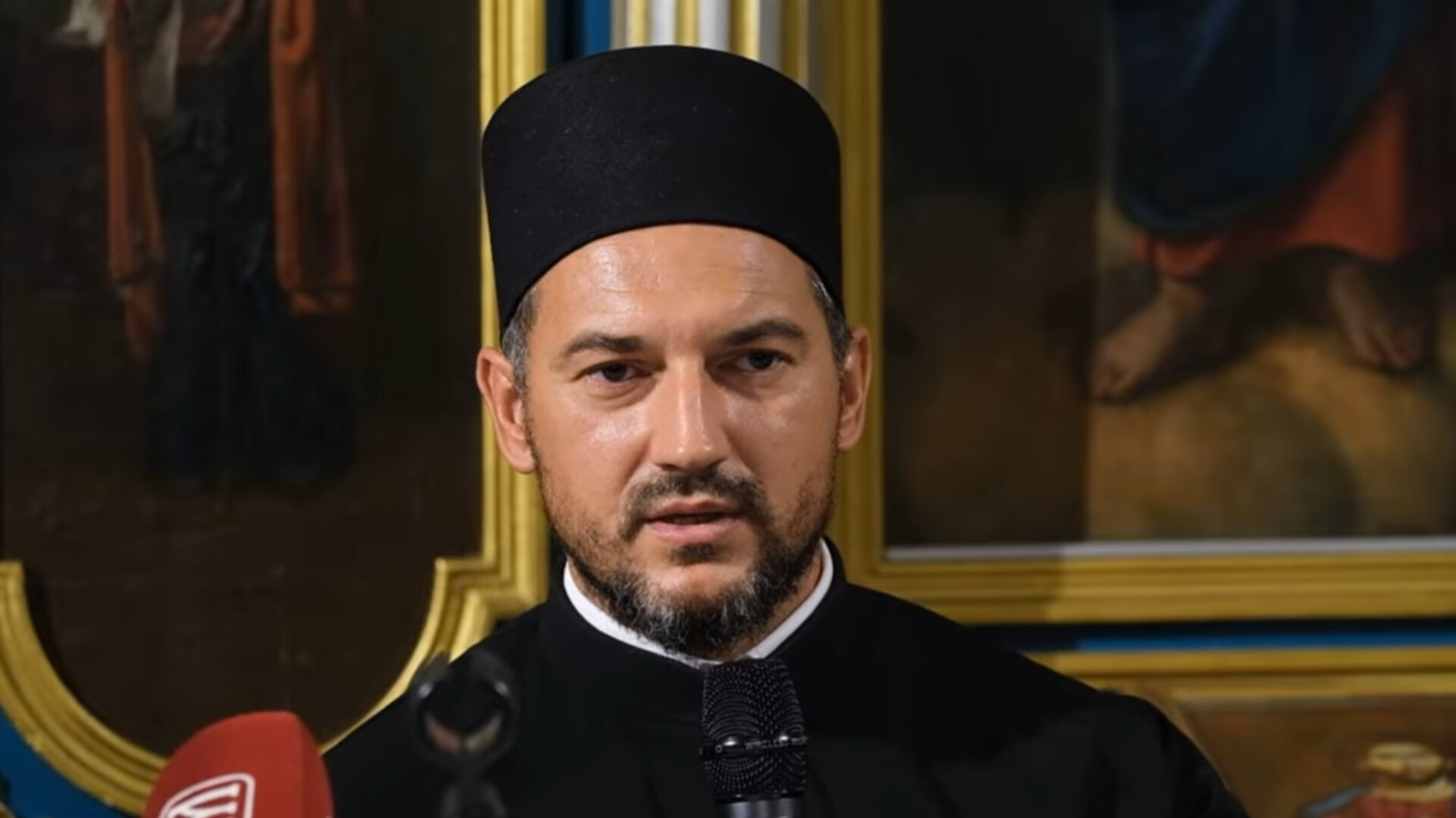
Address by Protopresbyter Aleksandar Jevtić, parish priest of Kraljevo, at the discussion panel „Kinonia – A Call to Community,“ held on September 14, 2026, to mark the second anniversary of the „Kinonia“ portal.