
WRITTEN BY: Catechist Branislav Ilić, editor of the portal „Kinonia“
We are in the days of a multi-day fast that we call the Apostolic Fast, which was previously known as the Pentecost Fast. The Church calls us to this fast, following the example of the holy apostles, who, having received the Holy Spirit on the day of Pentecost, prepared themselves through fasting and prayer for the preaching of the Gospel throughout the world. The Holy Spirit, descending upon the apostles, the Spirit of truth, the Spirit of wisdom and revelation, wrote a new law in place of the Sinai law. The Sinai law was replaced by the grace of the Holy Spirit, the lawgiver, who gives strength to fulfill God’s law, pronouncing justification not by works, but by grace.
The fast after Pentecost has been known since ancient times. The first unambiguous reference to a general fast after Pentecost is found in the Apostolic Institutions: “Since you have celebrated Pentecost, celebrate one week, and after it fast one week. For it is right to rejoice in the gift of God (the descent of the Holy Spirit) and to fast after the relief (at Pentecost).” The establishment of the Apostolic Fast among Orthodox believers in both the East and the West was facilitated by the construction of churches in Constantinople and Rome dedicated to the Apostles Peter and Paul (around 324) and the consecration of the Church of the Holy Apostles in Constantinople on the feast of the Apostles, June 29/July 12. Gradually, under the influence of monastic practice, a consistent custom arose of practicing fasting throughout the entire period that begins after All Saints’ Sunday and ends with the feast of the Holy Apostles Peter and Paul. From the testimonies about the origin and development of the apostolic fast, we come to the conclusion that fasting is necessary not only to change ourselves for the better, but also to preserve within ourselves the joy and gifts that we receive during such great feasts as Pentecost. In this spirit, it is clear that this fast is also a form of thanksgiving for the gifts we have received.
“After the long feast of Pentecost, fasting is especially necessary, so that through its struggle we may purify our thoughts and become worthy of the gifts of the Holy Spirit,” teaches us Saint Leo the Great. This feast, which the Holy Spirit sanctified by His descent, is usually accompanied by fasting, beneficially established for the healing of soul and body, and therefore requires that we observe it with due grace.
We observe the sacred period of fasting and participate in it wholeheartedly so that the gifts that God has now given to the Church may remain in us. Having become temples of the Holy Spirit and more than ever filled with divine waters (grace), we must not submit to any lusts, we must not serve any vices, lest the abode of virtue within us be desecrated. In this spirit, Saint Leo of Rome further writes: “Among the apostolic canons inspired by God himself, the leaders of the Church, inspired by the Holy Spirit, first established that all virtuous undertakings begin with fasting. Therefore, we must practice fasting especially at this time, when fasting is commanded us, after the fifty days that have passed from the Resurrection of Christ to the Descent of the Holy Spirit, which we have spent in special solemnity. This fast is commanded to protect us from the carelessness into which it is so easy to fall. If the field of our body is not constantly cultivated, thorns and weeds easily grow there, and such fruit is born that it is not gathered into the barn, but is condemned to be burned. Therefore, we are now obliged to guard with all care the seed that we have received into our hearts from the heavenly Sower, and to be careful that the envious enemy does not in any way corrupt what God has given us, and that the thorns of vice do not grow in the aradise of virtues. This evil can only be prevented by charity and fasting.”
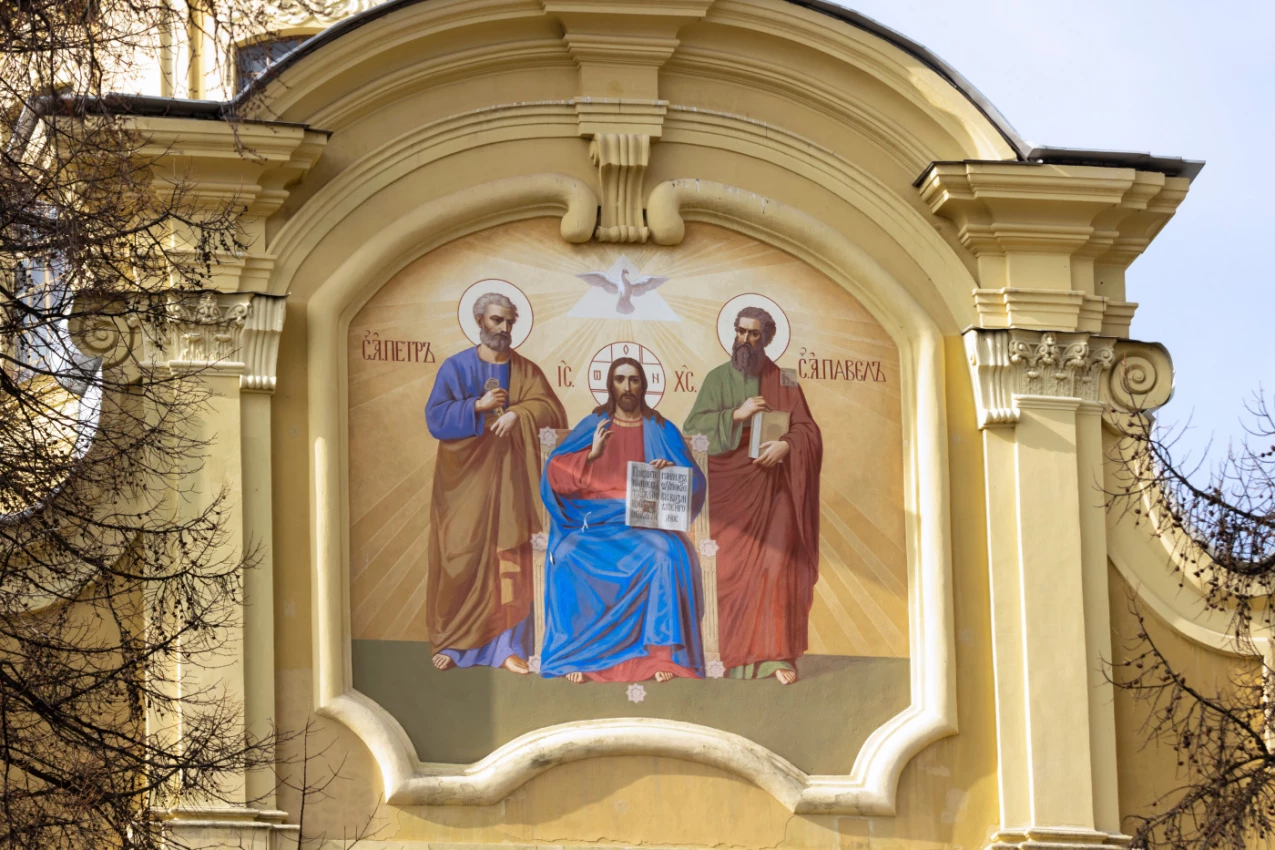
Following the example of the holy apostles Peter and Paul and surrendering ourselves to their prayerful patronage, we are called to persevere in every good work in these blessed days, to multiply virtue and become like those who learned virtue from the Lord, who is Virtue Incarnate. The evangelical seed of faith that has been sown in our hearts will be multiplied many times over if, through fasting, prayer, and good works, we witness the beauty of communion with the Lord and all the saints. This blessed period of apostolic fasting is an opportunity to actualize in our lives the words of the wise apostle Paul: “It is no longer I who live, but Christ lives in me.” When Christ dwells in us, then He becomes the measure and rule of our life, because when Christ is in the first place in our life, then everything will be in its place. The Holy Apostles were the most wonderful workers of love, which is why we are called to dedicate these days given to us by God to deeds of love, first in relation to God, and then in relation to every person as a God-like being. Modern man is eager for a sincere embrace, his heart is eager for sincere love that stems from Christ-like love, about which the Holy Apostle and Evangelist John the Theologian most eloquently theologizes. These venerable days call us to step out of our egoism and our self-sufficiency. This prayerful and ascetic walk towards the feast of the Holy Apostles awakens our dormant hearts and calls us to make room in our hearts for every person who finds himself on our life’s path, because no encounter is accidental, but is a work of the unspoken providence of God. May the ancient words from the Starechnik always be on our minds and in our hearts: “You have seen the face of your brother and your sister, you have seen the face of God.”